 Morocco Tour Package
Is Morocco Safe for Tourists?
Is Morocco safe to visit? This page answers that with the actual wording of the UK, Canadian and US travel advisories, the recorded road death figures, the scams that operate in the medinas and the natural hazards worth knowing. Morocco received 17.4 million tourists in 2024, up 20 percent on 2023, and violent crime against visitors stays rare. The bigger risks are petty theft, bogus guides and the roads. You will find each risk laid out separately, with the emergency numbers and the law on guides, alcohol and conduct. If a guided package removes some of those risks, the comparison of Morocco tour packages shows how. The bookable tours are compared on Morocco Tour Package.
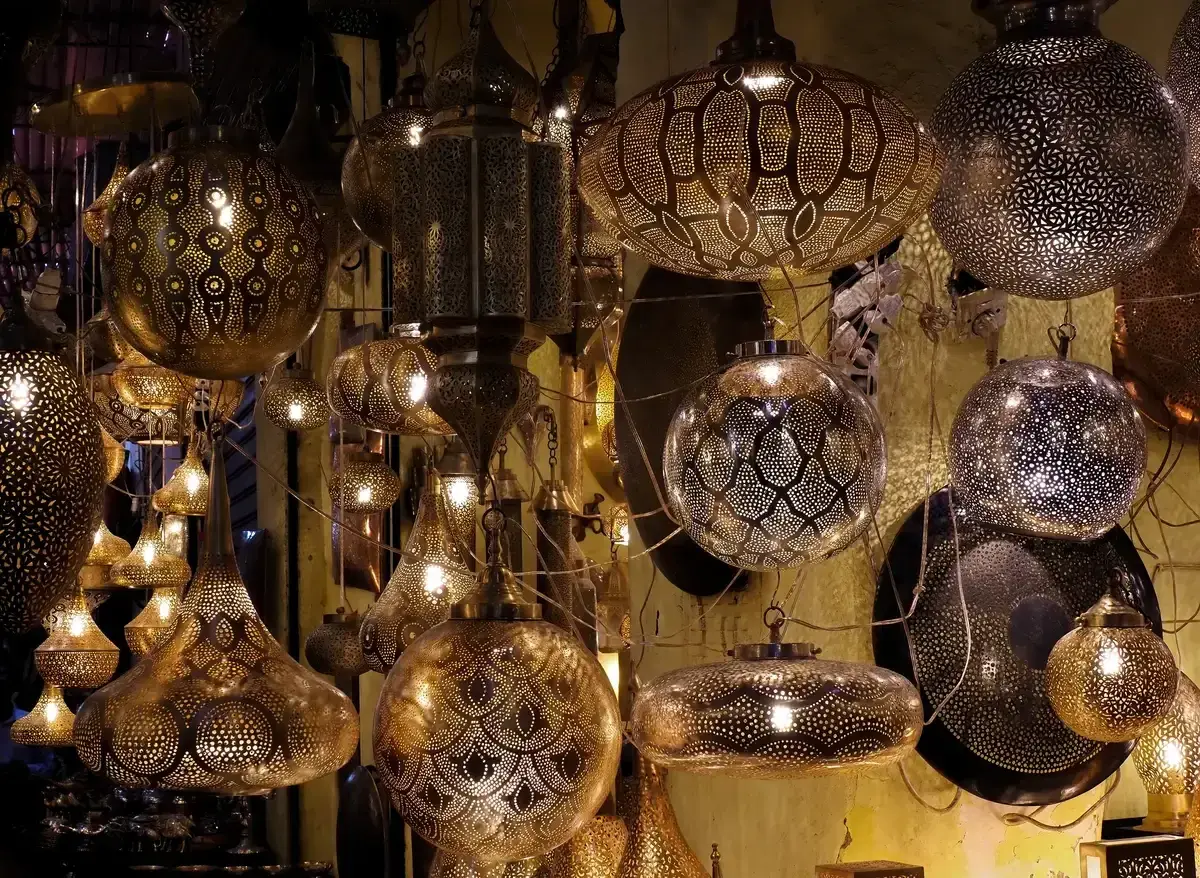
Metal lanterns hanging in a Marrakech medina souk. Photo: Petar Milošević, CC BY-SA 4.0, via Wikimedia Commons
Quick answer Short answer on safety
Is Morocco safe? Yes for most visitors: the UK FCDO carries no blanket advice against travel, and Canada advises only a high degree of caution. Morocco logged 17.4 million tourist arrivals in 2024. The risks that actually affect tourists are petty theft, unlicensed guides, road accidents and the weather. None of them are hard to manage with basic precautions.
Key takeaways
- The FCDO has no advice against travel and its Morocco safety page points to pickpocketing and bogus guides, not danger citywide.
- A driver takes self-driving off your hands, and that matters because the road risk is real: Morocco recorded 4,024 road deaths in 2024. See how that plays out on a 7-day private Casablanca to Marrakech tour.
- Nomadic Matt rates Marrakech and Essaouira as having fewer scams than Fes or Casablanca. The classic loop stops are compared on the homepage under the classic route stop by stop.
- When to go matters for heat and snow on the passes. The seasons are broken down in the guide to the best time to visit Morocco.
What the Travel Advisories Say
Four governments matter for most readers. Two of their positions are confirmed here from the primary pages, one comes from a news report of the advisory, and one could not be read at all.
Levels and Warnings, Government by Government
The table below compares what each government actually says, using the wording their pages give. The UK and Canadian figures come from the advisories themselves. The US level comes from a Newsweek report of the advisory, because travel.state.gov could not be read directly, so treat it as reported rather than confirmed. The Australian Smartraveller page could not be read, so no Australian level is given here.
The pattern across the confirmed sources is consistent: no government tells its citizens to stay away. Each points to terrorism as the reason for caution and to petty crime as the day-to-day problem.
Sources: UK FCDO, Canada travel.gc.ca, Newsweek on the US advisory.
| Government | Level or wording | Main warnings |
|---|---|---|
| UK FCDO | No blanket advice against travel, page updated 19 August | Terrorists likely to try attacks, including at tourist sites and transport hubs, pickpocketing, bag-snatching and scams common, road accidents frequent |
| Canada | Exercise a high degree of caution (with regional advisories), updated 26 May | Terrorism threat, avoid non-essential travel to Western Sahara, armed robberies with knives, night driving advised against |
| United States | Newsweek reported Level 2, Exercise Increased Caution (not confirmed on travel.state.gov, which could not be read) | Terrorism; Casablanca named a high-threat post and Marrakech high crime in the reported text. Check travel.state.gov directly for the current wording |
| Australia | Not stated | The Smartraveller page could not be read, so no level could be confirmed |
What No Blanket Advice Against Travel Means for You
The FCDO page, last updated 19 August, carries no advice against travelling to Morocco. The FCDO does single out areas: the Morocco-Algeria land and sea borders are closed and crossing without authorisation is illegal, and Canada advises staying 20 km from the Algerian border and 30 km west of the Western Sahara berm. Canada also advises against non-essential travel to Western Sahara, which the FCDO treats on a separate advice page.
Check your route against these limits before booking. The FCDO also warns of a high global threat of terrorist attack and says attacks in Morocco could target transport hubs, tourist locations and crowded places. It advises staying alert in crowds, and notes protests can occur without warning in large cities.
For the crime picture in the medinas themselves, the comparison of Morocco tours on the homepage shows which packages use licensed guides in each city.
Sources: UK FCDO Morocco advice, Canada travel advice.
The Real Risks, One by One
Terrorism gets the headlines, but the risks most likely to touch your trip are smaller and more practical. Here they are one at a time.
Petty Crime, Scams and Unlicensed Guides
The FCDO says pickpocketing, bag-snatching and drive-by motorcycle theft are common in tourist areas, and that credit card fraud and scams are common. It also reports occasional violent crime, including knife attacks against tourists. Canada says armed robberies with knives have caused injuries and deaths, and records the killing of two Scandinavian hikers near Imlil in 2018, Louisa Vesterager Jespersen, 24, and Maren Ueland, 28, as an example of attacks that targeted foreigners. Those cases stay rare.
The everyday problem is the scam. Guiding without a registered license is illegal in Morocco, yet bogus guides harass visitors in the medinas and may charge around €20 for a short walk or steer you to commission shops. Wikivoyage lists Fes tricks such as touts posing as hotel owners and tannery guides claiming roads are closed, and warns that guides in Rissani and Erfoud may offer a 5 dirham ride to Merzouga and strand you about 20 km north at their own auberge. Marrakech taxi drivers are obliged by law to use a meter but often refuse and quote inflated fixed rates.
The fixes are cheap: use only officially badged guides, ask your hotel to arrange one, report unlicensed guides to the tourist police, and insist on the meter or agree a price before the taxi moves. The Marrakech tourist police office stands near the post office on Place Jemaa el-Fna and can be reached on +212 5 24 38 46 01.
Roads: the Numbers and Why a Driver-Guided Package Helps
Roads are the risk worth taking seriously. Morocco recorded 4,024 road deaths in 2024, up 5.37 percent on 2023, and 1,624 deaths from January to May, 20.9 percent more than the same period a year earlier. Riders of two- and three-wheeled vehicles made up 43.19 percent of deaths and pedestrians account for over 1,000 a year. The FCDO says road accidents are frequent and night-time visibility is poor, and Canada advises against driving at night, noting that national roads are narrow and congested with frequent ID checkpoints.
The Atlas crossing concentrates the danger. The N9 over Tizi n'Tichka, the highest major pass in North Africa at 2,205 m by a 2022 GPS measurement (a sign at the top still shows 2,260 m), is well paved but narrow in places, with frequent hairpins, one lane per direction and few safe pull-offs. Snow falls on it frequently from November through March, and heavy snowfall halted traffic in both directions on 3 January. The Marrakech to Ouarzazate leg is 198.3 km and about 3 h 24 min of driving, and the full Marrakech to Merzouga run is 534.1 km and about 9 h 27 min before stops per Rome2Rio, while KimKim gives 560 km and 10 to 13 hours.
This is where a package changes the risk profile. On the 7-day private Casablanca to Marrakech tour from $1,511 per person on its 2 to 3 traveler option, a private driver does the driving, so you never handle a hairpin yourself. The 3-day Merzouga Sahara desert tour from $129 per person (the lowest of its three options) has a driver-guide for the Atlas crossing at the lowest price on this site.
Earthquake, Floods, Heat and Other Natural Hazards
The Al Haouz earthquake struck in 2023 at magnitude 6.9 per Wikipedia (another report says 6.8), with its epicentre 73.4 km southwest of Marrakech near the village of Ighil. It killed at least 2,960 people by Wikipedia's count, while the FCDO says nearly 3,000 and another report nearly 2,000. It injured 5,674 and collapsed 19,095 homes across more than 2,930 villages. Marrakech itself kept functioning: Menara airport stayed open, most city businesses reopened by 10 September, and the airport recorded 1.3 million arrivals in two months of early 2024. A 120 billion MAD five-year reconstruction plan followed. A repeat on your trip is unlikely, but Morocco is seismic country.
Water and heat matter more often. The FCDO warns of flash flooding in the mountains and near rivers in winter, and of wildfires in summer. Summer maximums inland and in the Sahara exceed 44 C, and Marrakech averages 29 C in July and August with highs near 38 C. The chergui, Morocco's sirocco wind, can reach 100 km/h and peaks in March and November. The FCDO also flags altitude sickness in parts of Morocco and stray dog packs that can carry rabies. For a full picture of which months suit which regions, see the guide to the best time to visit Morocco, and for the paperwork and money side, the homepage section on visas, money and safety covers it.
If the worst happens, the emergency numbers are 150 for ambulance and fire, 190 for police and 177 for the Gendarmerie, though Visit Marrakech lists 19 for police and 15 for firefighters, so the sources differ and it is worth saving both sets. Public healthcare is limited and private clinics are better, so carry insurance that covers medical evacuation. Drinking spirits poured outside licensed venues carries a specific FCDO warning, because methanol-tainted alcohol has caused deaths and cannot be detected by taste or smell.
Sources: UK FCDO safety and security, Hespress road death figures, 2023 earthquake.
Morocco: What to Know Before You Visit
Practical advice on safety, scams and etiquette before a first trip. Third-party video by Wolters World. This site did not shoot it and has no relationship with the creator.
Women Travelers and Dress
World Nomads calls Morocco safe for women travelers. The realistic risks are unwanted attention and petty theft rather than violence.
Harassment and the 2018 Law
The UK FCDO says women may receive unwanted attention in Morocco, especially when traveling alone, and recommends loose clothing that covers the arms, legs and chest. World Nomads calls Morocco safe for women travelers but warns that lone women can be vulnerable to harassment, and notes that a visible fuss usually brings help from bystanders.
Morocco passed Law 103-13 on violence against women, with its final vote in 2018. The law created criminal offences for sexual harassment in public spaces, cyber harassment and forced marriage. Human Rights Watch notes its limits: fewer than 10 shelters for survivors exist nationwide, and a protection order requires criminal prosecution first. The practical takeaway is that harassment in public is now a crime, but the law has limits, so prevention matters as well as legal remedy.
On public transport, World Nomads suggests sitting with other women or families and avoiding remote mountain areas alone. Canada's advisory cites the 2018 killing of two Scandinavian hikers near Imlil as an example of an attack that targeted foreigners. Hiking with a registered guide rather than alone addresses that risk.
What to Wear
The FCDO recommends loose clothing covering arms, legs and chest. World Nomads adds specifics for the beach and for couples:
Bikinis belong on private beaches only, and topless sunbathing is never appropriate. Sex outside marriage is punishable by law, and hotels may ask unmarried couples for proof of marriage.
Solo travelers who want the logistics handled can look at a private package such as the 7-Day Private Casablanca to Marrakech Tour, which starts at $1,511 per person on its 2 to 3 traveler option and includes a private driver for the whole route. The Morocco tour packages overview explains what each package covers, and the visa and money basics sit on the same page under practical matters.
Sources: FCDO, World Nomads, Human Rights Watch
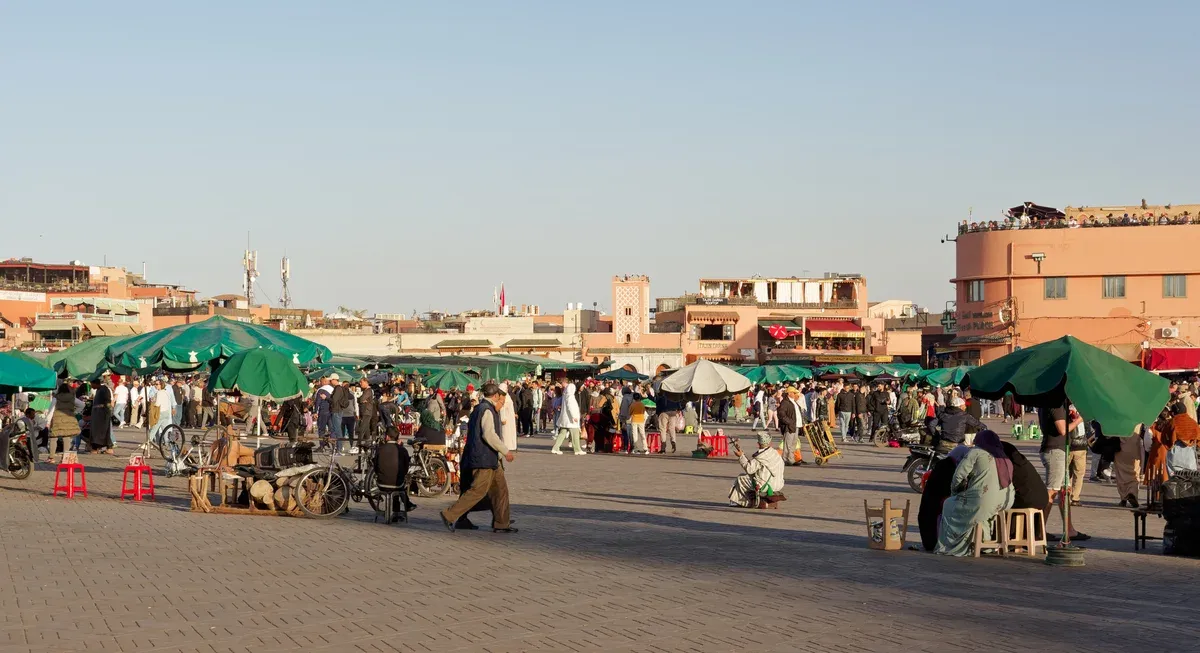
The Jemaa el-Fnaa square in Marrakech in late afternoon. Photo: Jakub Hałun, CC BY 4.0, via Wikimedia Commons
Is a Morocco Tour Package Safer
A package does not remove risk, but a driver-guided one takes self-driving and the Atlas passes off your hands.
What a Licensed Driver and Guide Change
Roads are the main hazard. Morocco recorded 4,024 road deaths in 2024, up 5.37 percent on 2023, and 1,624 deaths from January to May, which was 20.9 percent more than the same period of 2024. The FCDO says road accidents are frequent and night-time visibility is poor, and Canada advises against driving at night because national roads are narrow and congested. The Marrakech to Merzouga leg alone is 534.1 km and about 9 h 27 min of driving per Rome2Rio (KimKim says 560 km and 10 to 13 hours), including the winding Tizi n'Tichka pass at 2,205 m by GPS measurement (a sign at the top says 2,260 m), where snow falls from November through March and shut the road completely on 3 January.
A package puts that driving in the hands of a driver who knows the route. It also solves the guide problem: the FCDO advises using only officially badged guides in medina quarters because bogus tourist guides harass visitors, and World Nomads notes guiding without a registered license is illegal. Some packages include guided city tours in Fes and Marrakech, such as the 10-Day Morocco Desert Tour below.
The trade-off is honest to state: tours add stops, so a leg that maps at 3 h 24 min from Marrakech to Ouarzazate can take longer. And meals are often not included. The 10-Day Morocco Desert Tour via Imperial Cities, a shared departure for up to 14 at $2,403 per person, includes breakfast and dinner but not lunch, and the booking platform adds $302 in extra charges at checkout.
Private or Shared
Both formats use a driver, so both remove self-driving risk. The difference is control and group size.
Private packages such as the 7-Day Luxury Morocco Tour, at $1,799 per person from Marrakech to Casablanca, keep the vehicle to your group, which suits women traveling together and anyone who wants to set the pace. Shared departures cost less but put you in a bigger group. The 4-Day Luxury Sahara Tour from Marrakech is a shared option from $182 per person for the lower of two tent options, and groups can reach 60.
Keep the emergency numbers on your phone. The FCDO lists 150 for ambulance and fire, 190 for police and 177 for the Gendarmerie, while Visit Marrakech lists 19 for police, 15 for firefighters and 077 for the Gendarmerie. The sources differ, so save them all. The Marrakech tourist police can be reached on +212 5 24 38 46 01, with an office near the post office on Place Jemaa el-Fna.
Safety Dos and Don'ts
Do
- Do use only officially badged guides in the medinas, because the FCDO warns that bogus guides harass visitors and unlicensed guiding is illegal in Morocco.
- Do insist on the taxi meter, because taxi drivers are obliged by law to use one but Marrakech drivers often refuse and quote inflated fixed rates.
- Do carry ID, because Canada notes frequent checkpoints where ID must be shown.
- Do drink only at licensed venues, because public alcohol consumption outside them is prohibited and the FCDO warns that drinks containing methanol have caused deaths.
- Do book hot air balloon trips only through licensed operators and wear a crash helmet on quad bikes, because the FCDO says unlicensed balloon providers may not meet safety standards and quad bike accidents involving British nationals happen frequently.
Don't
- Don't drive at night or self-drive the Atlas passes, because Canada advises against night driving and snow closed Tizi n'Tichka in both directions in early 2026.
- Don't photograph military or political sites, because the FCDO says photographing them is illegal, and drones need permission from the civil aviation authority.
- Don't show public affection if you are a same-sex couple, because same-sex sexual relations are illegal under Article 489, with 6 months to 3 years in prison and a fine of 120 to 1,200 dirhams.
- Don't approach the Algerian border or the Western Sahara berm, because Canada advises staying 20 km from the Algerian border and 30 km west of the berm, and crossing the closed border is illegal.
Is Morocco Safe: FAQ
Can I travel to Morocco right now?
Yes. The UK FCDO page carries no blanket advice against travel, and Morocco received 17.4 million tourists in 2024, up 20 percent on the year before. Check the advisories summarized at the top of this page before you book.
Is Morocco safe for women traveling alone?
World Nomads calls Morocco safe for women travelers while warning that lone women attract unwanted attention, and the FCDO recommends covering arms, legs and chest. Morocco's 2018 Law 103-13 criminalized sexual harassment in public spaces. Details are in the women travelers section above.
What is the safest part of Morocco to visit?
Nomadic Matt says violent crime against tourists is rare while petty theft and scams are common, and rates Marrakech and Essaouira as having fewer scams than Fes or Casablanca. The areas to avoid are near the Algerian border and the Western Sahara berm, listed in the advisories section.
Which emergency number do I call in Morocco?
The FCDO lists 150 for ambulance and fire, 190 for police and 177 for the Gendarmerie, while Visit Marrakech lists 19 for police and 15 for firefighters. Save both sets, and note the Marrakech tourist police number +212 5 24 38 46 01.
Does a tour package make Morocco safer?
It takes self-driving off your hands. A private option such as the 7-Day Private Casablanca to Marrakech Tour starts at $1,511 per person on its 2 to 3 traveler option, with a private driver throughout. The comparison on the homepage covers what each Morocco tour package includes.
When is the safest time of year to visit Morocco?
Road conditions are best outside the November to March snow season on Tizi n'Tichka, and flash floods are a winter risk in the mountains while summer heat inland can exceed 44 C. Season-by-season detail belongs to the guide on the best time to visit Morocco.